Alice Wonderland Junk Journal: A Toolkit for Visual Creativity
In the landscape of digital creative assets, bundles promising versatility often fall short, offering quantity over cohesive quality. The Alice Wonderland Junk Journal collection stands apart by providing a focused, high-quality set of graphics anchored in a recognizable aesthetic. It is not merely a folder of images; it is a curated toolkit designed for creators who need consistent, theme-driven visual elements across multiple projects.
Defining the Core Asset and Its Purpose
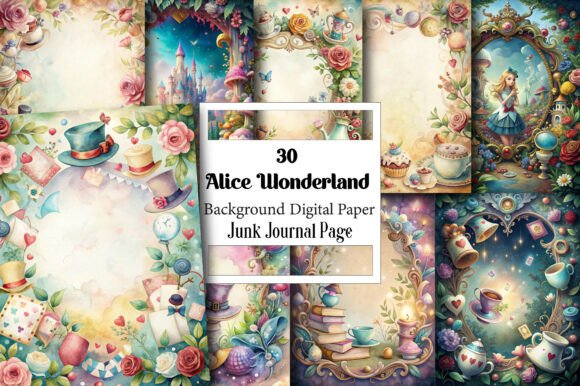
The Alice Wonderland Junk Journal is a digital download package featuring graphics inspired by the whimsical, vintage, and literary motifs of Alice's adventures. The key characteristic is its thematic coherence. Every element—from ornate frames to delicate floral patterns, playful character illustrations to distressed paper textures—is designed to work harmoniously. This makes it exceptionally valuable for projects requiring a unified visual narrative, eliminating the time-consuming search for matching assets from disparate sources.
Its primary purpose is to serve as a foundational resource for both digital and physical craft projects. The provided JPG files at 300 DPI resolution ensure professional-grade output for print, while the scalable nature of the digital files allows seamless adaptation for screen-based design. This dual applicability is a significant strength, bridging the gap between traditional crafting and digital content creation.
Evaluating Practical Performance and Quality
In real-world use, the performance of the Alice Wonderland Junk Journal hinges on its technical specifications and artistic consistency. The 300 DPI resolution is a critical detail, ensuring that prints for items like greeting cards, product labels, or wall art are sharp and devoid of pixelation. Users can resize dimensions without inherent quality loss, providing true flexibility. The removal of watermarks from the original files is another practical advantage, granting immediate commercial utility for small business applications.
The collection’s effectiveness is demonstrated through its breadth of included concepts. It anticipates the needs of a modern creator. For instance, a graphic designer might extract a subtle background pattern for a client’s website header, while a stationery maker might use the same pattern for a line of handmade writing paper. The assets support trend-conscious outputs like social media graphics and digital planner covers, while also catering to enduring crafts like decoupage art and junk journaling. This cross-platform reliability is a hallmark of a well-considered resource.
Key Strengths: Flexibility and Long-Term Value
A foremost strength is the asset's application flexibility. The list of suggested uses—from sublimation on tumblers and t-shirts to creation of party napkins, candle labels, and even playing cards—is not hyperbolic. It reflects the fundamental nature of the graphics: they are adaptable motifs. A single floral illustration can be a greeting card focal point, a repeating pattern on wrapping paper, or a minimalist logo element when isolated. This multipurpose functionality offers long-term value; a one-time download can fuel countless projects over months or years, adapting to evolving business needs or personal creative interests.
Presentation is also paramount. A cohesive theme, when used consistently, builds brand identity or personal style recognition. For entrepreneurs marketing a boutique brand—perhaps in niches like bridal, baby shower, or literary-themed goods—using the Alice Wonderland Junk Journal graphics across invitations, packaging, and website elements creates a memorable and professional aesthetic. For serious hobbyists, it elevates personal projects like handmade notebooks or party decorations from generic to curated.
Primary Beneficiaries and Ideal Use Cases
This collection is most beneficial for individuals and small businesses where visual cohesion and efficient resource management are priorities. Specific audiences include:
- Content Creators & Bloggers: Those focusing on lifestyle, crafting, fantasy, or vintage themes can use the graphics for distinctive blog post visuals, downloadable printables, and social media backgrounds, enhancing audience engagement.
- Small Business Owners in Craft & Stationery: Entrepreneurs producing handmade goods or digital products (like KDP interiors) can utilize the assets for product decoration, label design, and complementary marketing materials, ensuring a consistent brand experience.
- Freelancers in Graphic Design: Designers can leverage the pack as a rapid-start component for client projects requiring a specific whimsical or vintage tone, saving initial asset-gathering time.
- Educators & Event Planners: For creating themed classroom materials, wedding invitations, or birthday party decor suites, the pack provides a ready-made visual library.
- Serious Hobbyists in Junk Journaling & Paper Crafts: Those engaged in collage crafting, scrapbooking, or journaling gain a rich source of high-quality, printable elements that align with the popular "junk journal" aesthetic.
Practical Recommendations for Integration
To maximize its utility, users should approach the Alice Wonderland Junk Journal as a modular system. Begin by auditing the full set and categorizing elements (e.g., backgrounds, borders, icons, full illustrations). Store them in a project management system where they can be easily searched. For digital design work, consider creating a template file in your preferred software (like Canva or Adobe products) that incorporates a selection of these assets as master components, speeding up future project workflows. For physical crafts, test print a sample sheet at your intended output size to verify color and detail reproduction on your specific printer and paper stock.
Observations on Limitations and Considerations
While highly versatile, the Alice Wonderland Junk Journal is inherently niche. Its value is greatest for projects aligned with its core aesthetic: whimsical, vintage, literary, and occasionally fantastical. It is less suitable for projects requiring modern, minimalist, or corporate visuals. Users must also possess basic digital competency to resize, crop, and integrate the files into their chosen software or print processes. The product is a digital raw material; it does not include instructions or pre-made templates, requiring the user to supply the creative assembly.
Furthermore, as a themed collection, overuse within a single market or community could lead to visual similarity between different creators' outputs. The professional recommendation is to use these assets as a foundation, but to combine them with unique typography, custom color adjustments, or original content to maintain distinctiveness.
The Alice Wonderland Junk Journal represents a significant resource for the right creator. Its worth is measured not in the number of files, but in the depth of a unified theme and the professional quality of its execution. It fits needs centered on efficiency, theme consistency, and cross-media application. For those whose goals align with its aesthetic, it integrates smoothly into a workflow, acting as a reliable visual vocabulary for a wide array of creative and commercial projects.